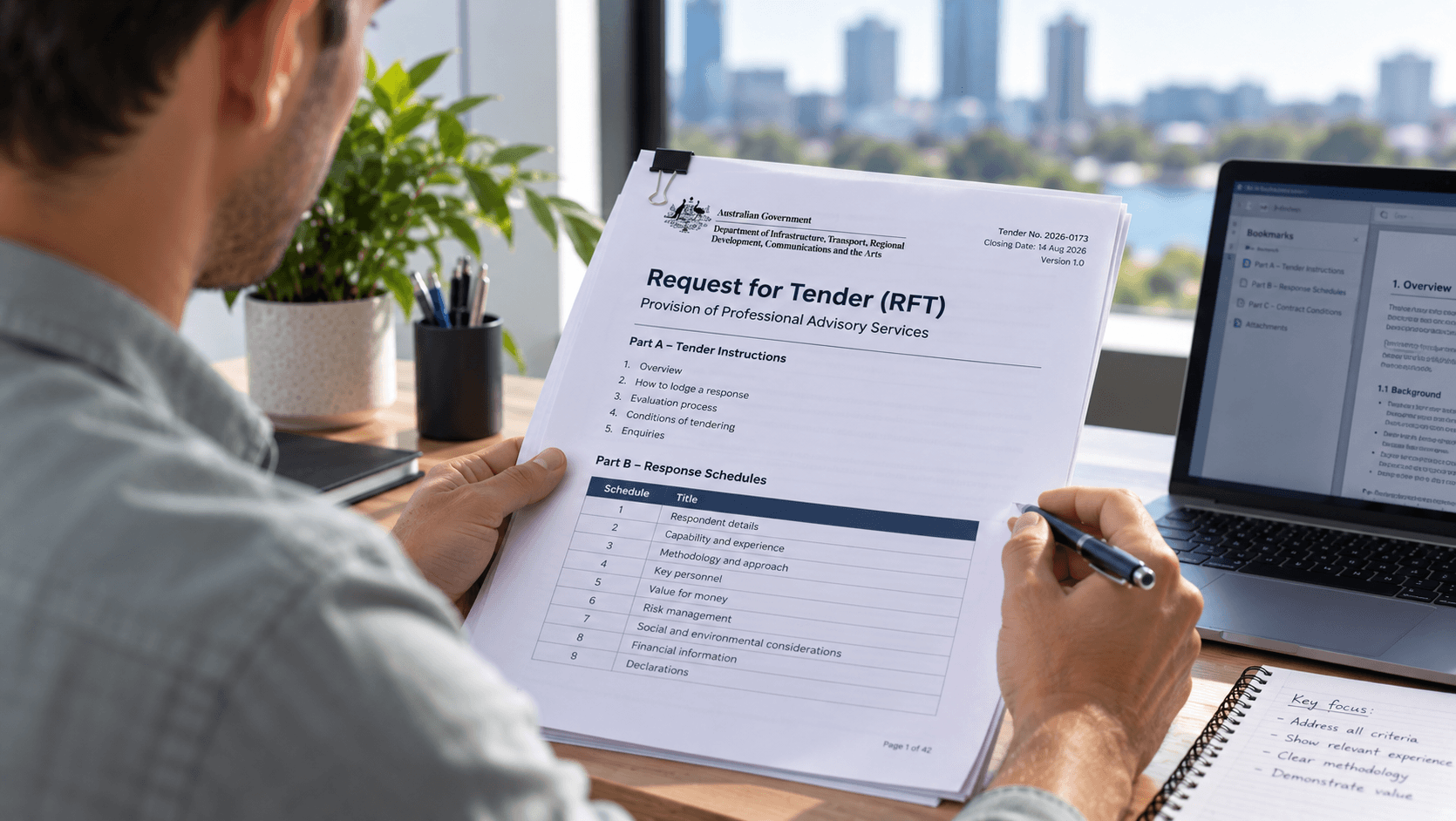
Somewhere, a business spent two weeks writing a genuinely excellent tender response. Strong methodology, competitive pricing, relevant case studies, a compelling case for why they were the right fit. And it was never scored, because their public liability insurance certificate had expired four days before submission.
Nobody reads the technical response at that point. It doesn't matter how good it is. Most tender processes run an administrative compliance check before evaluation even begins, and a bid that fails it is set aside: not scored low, simply not scored at all. The quality of the work becomes irrelevant the moment a checkbox goes unticked.
This is one of the most avoidable ways to lose a tender, and one of the most common. It has nothing to do with the strength of the proposal and everything to do with paperwork that was overlooked, outdated, or simply hard to locate at the moment it was needed.
Why This Happens More Than Anyone Admits
Compliance requirements for tenders are rarely dramatic. They're mundane, procedural, and easy to underestimate: current insurance certificates, valid trade licenses, up-to-date financial statements, specific accreditations, signed declarations, correct file formats. None of it is complicated. All of it is easy to let slip.
The reason it happens so often comes down to where these documents actually live. Certifications expire quietly in the background while attention is on the exciting parts of the bid: the pricing, the methodology, the pitch. Insurance renewals happen on their own schedule, disconnected from tender deadlines. And when a document is needed urgently, it's often buried in someone's inbox, a shared drive folder from eight months ago, or a filing cabinet that nobody's touched since the last audit.
The paperwork isn't hard. Finding the right, current version of it, fast, under deadline pressure, is.
Where Bids Actually Get Disqualified
1. Expired Certifications and Insurance
Public liability insurance, professional indemnity cover, industry-specific accreditations: these all have expiry dates that don't align with tender deadlines. A certificate that was valid when the business last checked it can quietly lapse by the time a new tender comes around.
2. Outdated Financial Statements
Many tenders require recent financial statements as proof of stability, often within a specific timeframe, such as the last two financial years. Submitting an outdated statement, or missing one entirely because it wasn't readily available, is a common and entirely preventable disqualification.
3. Wrong File Formats or Incomplete Submissions
Some procurement portals are strict about file types, naming conventions, or page limits for supporting documents. A document submitted as the wrong format, or missing a required signature page, can fail an automated or manual compliance check regardless of its content.
4. Missing Declarations or Signed Forms
Standard declarations (conflict of interest statements, anti-collusion certificates, modern slavery statements, depending on the sector) are easy to treat as boilerplate and easy to forget entirely when a bid is being finalized in a rush.
The Real Cost of a Paperwork Disqualification
A technical or pricing loss at least offers something to learn from: feedback on where the response fell short, room to improve for next time. A compliance disqualification offers none of that. It's a loss with no lessons about the actual quality of the work, just a hard stop before the content was ever considered.
The costs compound quietly:
Wasted writing effort: days of work that never gets evaluated at all
No feedback loop: nothing to learn from, because the response itself was never assessed
Reputational friction: repeated administrative failures can flag a business as unreliable to a contracting authority, even when the underlying work is strong
Missed contract value entirely: for a reason that had nothing to do with capability
It's the tender-loss equivalent of losing a race because a shoelace was untied at the start line, not because of how fast anyone actually ran.
What Reliable Compliance Readiness Actually Looks Like
Businesses that rarely lose tenders to paperwork tend to treat compliance documentation as infrastructure, not an afterthought:
One central, current record of every certification, license, and accreditation, not scattered across email, drives, and desks.
Expiry dates tracked actively, so renewals happen before a document is needed, not scrambled for after a tender is already underway.
Financial statements and declarations kept submission-ready, rather than assembled fresh for every bid.
A quick pre-submission compliance checklist, run before the technical response is even finalized, because there's no point polishing a proposal that won't be read.
None of this is about writing better tenders. It's about making sure the tenders that are written actually get read.
Closing the Gap
Tender Assist is designed to solve this problem.
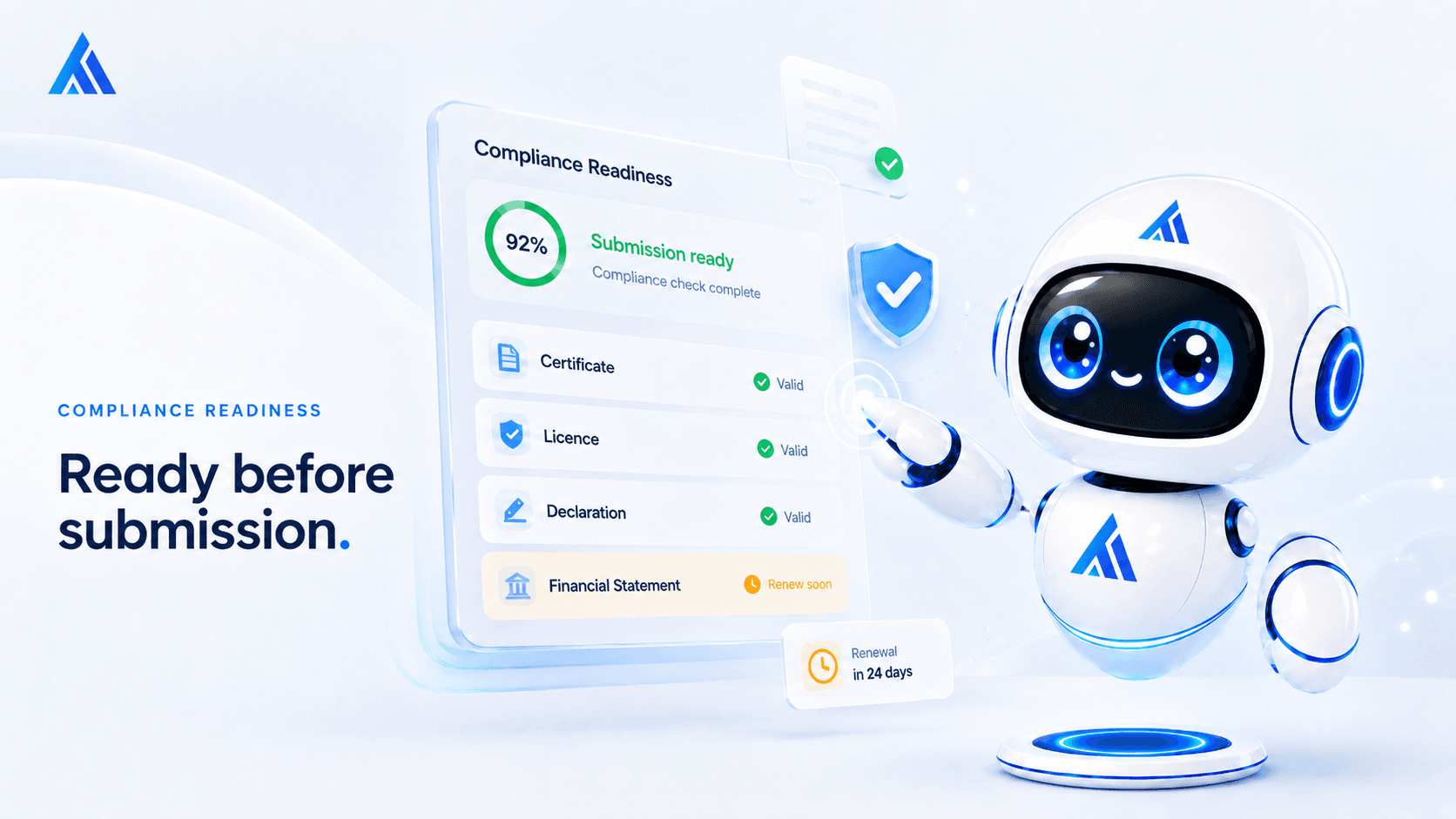
Rather than manually figuring out which certifications, licenses, and declarations a given tender requires, Tender Assist automatically populates the relevant compliance requirements for each opportunity and validates whether your business has already met them, flagging what's missing before submission, not after. That check happens as part of the process itself, so a required document isn't something you have to remember to think about; it's something the system already checked for you.
Furthermore, Tender Assist tracks the status of what's stored in your Knowledge Base and, through its recommendations system, proactively suggests when a certificate, license, or financial statement needs to be renewed or updated, well before it becomes the reason a submission gets set aside. Instead of discovering an expired insurance certificate at the compliance check, you're prompted to update it ahead of time.
A strong tender response deserves to actually be read. Automatically validated, continuously current compliance documentation is what makes sure it gets that chance.
Frequently asked questions
Why do strong tender responses sometimes get disqualified before they're even evaluated?
Most tender processes run an administrative compliance check before scoring begins, verifying certifications, insurance, financial statements, and required declarations. A bid that fails this check is typically set aside entirely, regardless of the quality of the technical response, because it never reaches the evaluation stage.
What compliance documents most commonly cause tender disqualifications?
The most frequent culprits are expired insurance certificates or accreditations, outdated financial statements, incorrectly formatted files, and missing signed declarations such as conflict-of-interest or anti-collusion statements.
How often should compliance documents be reviewed for tender readiness?
Ideally, certifications and insurance should be tracked continuously against their expiry dates rather than checked only when a tender arises. Financial statements should be kept current to the timeframe most tenders in your sector typically require, often the last one to two financial years.
Is a compliance disqualification the same as losing on price or quality?
No. A compliance disqualification happens before evaluation begins, so the technical quality or pricing of the response is never actually assessed. It's an administrative loss, not a competitive one, which also means there's no scoring feedback to learn from afterward.
Can centralizing compliance documents actually prevent tender disqualifications?
Yes. Most paperwork disqualifications happen because a current, correct document wasn't readily available at submission time, not because the business lacked the document altogether. Keeping certifications, licenses, and financial statements centralized and current removes that last-minute scramble.
Do all tenders have the same compliance requirements?
No. Requirements vary by sector, contract value, and contracting authority: some require specific industry accreditations or additional declarations others don't. This is exactly why it's easy for a business bidding across multiple sectors to lose track of which documents are current for which type of tender.
Tired of scrambling for the right certificate at submission time? See how Tender Assist's Knowledge Base automatically validates your compliance requirements and keeps documents up to date.